MFA Thesis Exhibition. 2025.
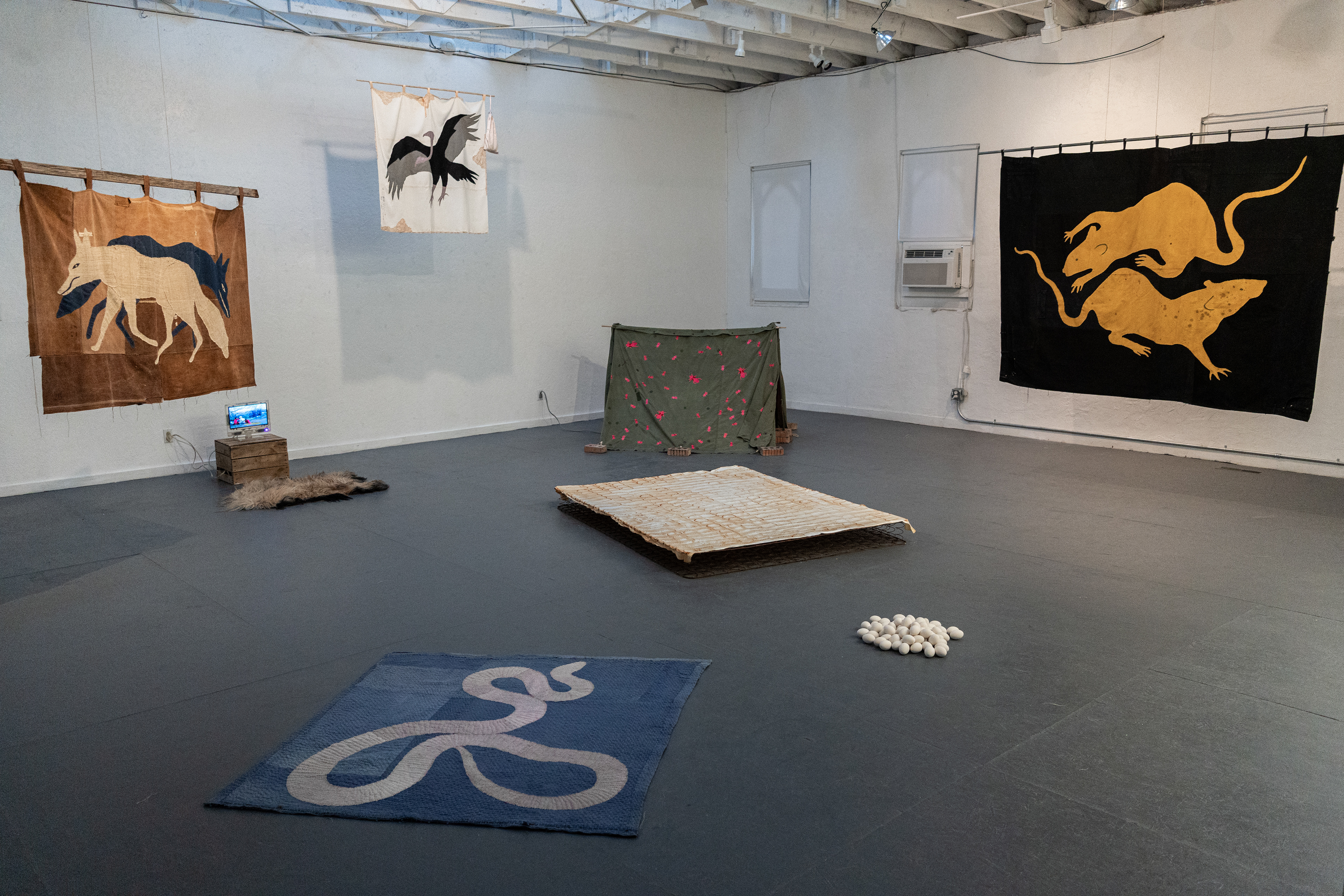
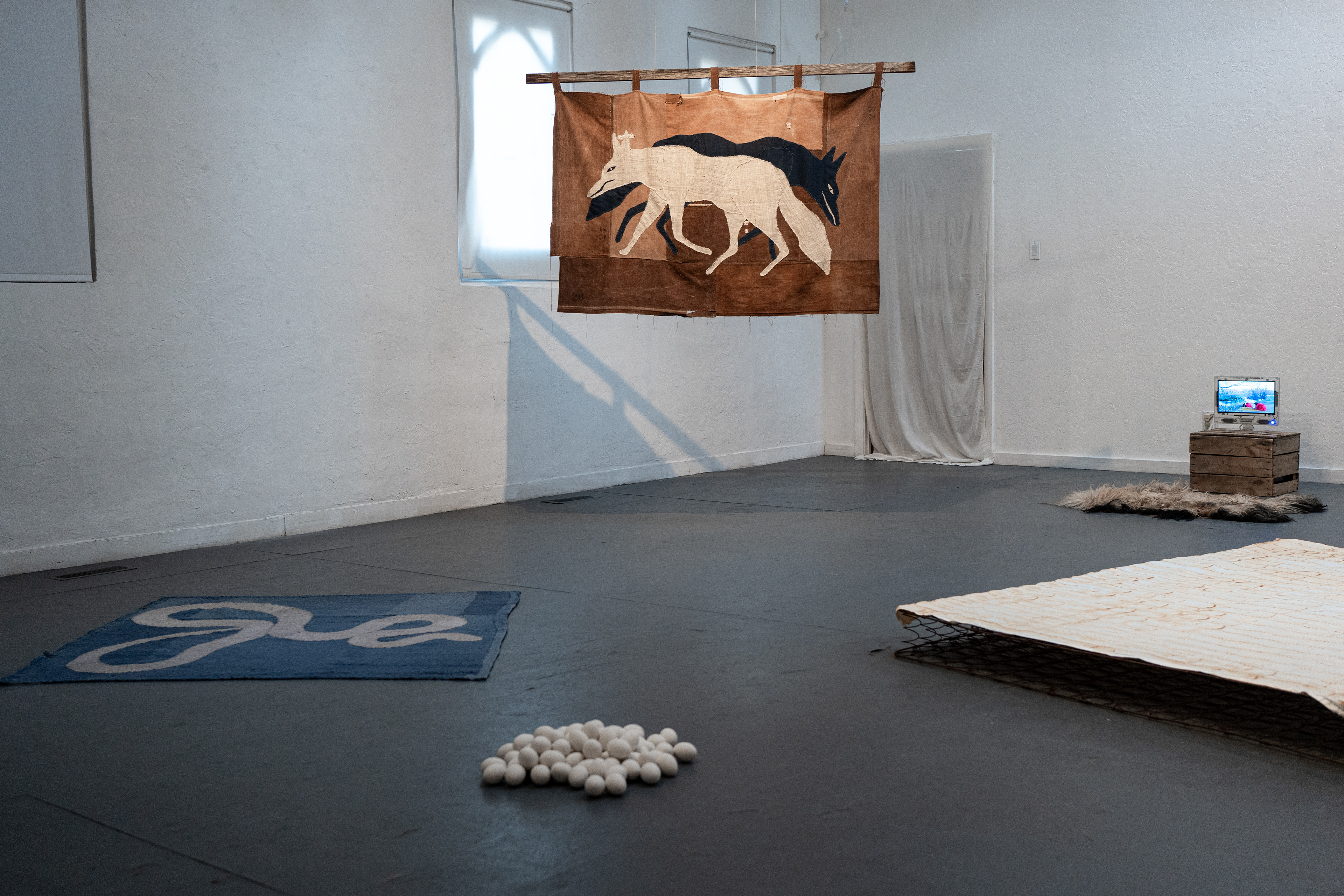
Scrap – something discarded, left behind, a remnant of something larger. It is also an action. To scrap by is to make do. To be scrappy is to piece together whatever tools and resources are available—not only to survive, but to create moments of vitality that move across relationships, systems, and material life. Scrapiness also carries its shadow. Often deemed deviant or undesirable, scrapiness resists mainstream notions of purity and order through chaotic and adaptive methods that unsettle these very constructs.
My body of work begins here. I employ mostly discarded materials collected over time—old cloth, overproduced thread, and other relegated objects—and transform them into new forms held together by acts of embodied patience, presence, and care. Rooted in animist belief, I try to meet materials as autonomous beings, engaging with them through practices of attunement, curiosity, and co-becoming. When collecting, I position these materials as markers of my life, noting the time, place, and intimate details of when I found, carried, and altered them. I travel frequently, especially between Malaysia and the United States where I hold deep family and community ties. These movements open pathways for me to gather materials across distinct contexts. The scraps I bring together from these times and places then become a sort of map. Through them, I trace and reconcile a fractured, shifting sense of self, shaped by entanglements of intimate, environmental, and structural landscapes.
The animal scavengers (and other less-definable forms) I depict operate on the margins, much like the materials and ideas I work with. This approach draws from experiences and values shaped by queer, punk, and other subcultural spaces, where scavengers are often celebrated for their adaptability, resourcefulness, and capacity to thrive within the gritty worlds of garbage, death, and decay. It’s near impossible to go to a punk show without seeing at least one possum stitched to a jacket or bum flap. Symbolically and literally, these animals resist the death-machine of imperialism: they reclaim what has been ‘othered’ or left to rot and transform it into nourishment. In centering these overlooked beings and materials, my work interrogates structural violence and amplifies enduring agency. Through this process, I transform the memories and materials I’ve gathered into objects alive with protection, guidance, and warmth.
note on place and naming
the place-names i use in my material descriptions for each work in SCRAP mark where materials were gathered, altered, or grown. i use the colonial or anglicized names while holding awareness that these places exist on stolen, unceded indigenous lands, shaped by centuries of colonization, and defended through the ongoing resistance of the peoples who have lived and continue to live on these lands. this choice reflects my lived experience as a white multiracial settler navigating these communities and places tied to structures of extraction, settlement, migration, displacement, and ongoing resistance. below are the place-names as they appear in my material descriptions, alongside their traditional names, histories, and rightful stewards:
albuquerque → unceded tiwa lands
willits → unceded pomo lands
kuala lumpur → dispossessed lands traditionally stewarded by orang asli and malay communities
langkawi → dispossessed lands traditionally stewarded by orang laut and malay communities
cairo / kahira → dispossessed lands shaped by successive internal states and ongoing global power structures. japan/ nippon → lands shaped by centuries of internal state consolidation and ongoing global power structures, including the dispossession of ainu, ryūkyūan, and other indigenous territories
willits → unceded pomo lands
kuala lumpur → dispossessed lands traditionally stewarded by orang asli and malay communities
langkawi → dispossessed lands traditionally stewarded by orang laut and malay communities
cairo / kahira → dispossessed lands shaped by successive internal states and ongoing global power structures. japan/ nippon → lands shaped by centuries of internal state consolidation and ongoing global power structures, including the dispossession of ainu, ryūkyūan, and other indigenous territories
i offer these as an entry point, aware that they compress histories, places, relationships, and lives that exceed description.